Carpet Cleaning Tips
How Can You Tell Whether Upholstery Is Safe to Wet Clean?
A W or WS code is a useful starting point, not a blanket approval for soaking or extraction. Learn the checks that help determine whether upholstery is a reasonable wet-cleaning candidate.
You cannot tell whether upholstery is safe to wet clean from color, softness, or appearance alone. Start with the furniture maker's care instructions and cleaning code, then evaluate the fabric, dyes, backing, cushion fill, trim, construction, condition, and previous treatments. A W or WS code is a useful starting point, but it is not permission to soak the piece or automatically use a carpet-cleaning machine. If the tag is missing, the fabric is unstable, or a discreet test shows color transfer, texture change, or a water mark, stop and have the piece evaluated before adding more moisture.
Start with the care tag, not a guess
Look under the seat cushions, beneath the deck, or on the underside of the furniture for a care label. If the tag names the manufacturer and fabric collection, check the current care instructions for that exact material. The manufacturer's directions should take priority over a general rule you found online.
The common upholstery codes are a useful first screen:
W means the manufacturer permits a water-based upholstery cleaning product for the care described on the label.
S means a water-free solvent method is specified. Water should not be the default.
WS or SW means either a water-based or approved solvent method may be permitted.
X generally limits routine cleaning to vacuuming or light brushing. Liquid cleaning is not the safe default.
Read the wording around the code, too. A label may allow water-based spot cleaning while still advising against overall extraction or steam cleaning. It may also say not to remove and wash cushion covers. That is why the letter alone does not settle the question.
What "wet clean" should mean
Wet cleaning does not mean saturating the fabric. In professional upholstery work, it usually means applying a controlled amount of a suitable water-based cleaning solution, agitating only as the material allows, recovering moisture and suspended soil, and setting up reasonable airflow for drying.
The cleaner has to consider more than the face fabric. Water can reach the backing, seams, welting, cushion fill, adhesives, metal components, or a material hidden below the surface. A fabric that tolerates a damp spot-cleaning cloth may still be a poor candidate for heavy overall wetting.
This is also why a household carpet machine should not automatically be used on a sofa. Upholstery has different fabric constructions, thinner layers, tighter curves, more seams, and less room for moisture to move and dry.
Seven checks that matter before wet cleaning upholstery
1. The exact manufacturer guidance
Find the care code and any additional limitations. If you still have the purchase record or fabric name, use it to locate instructions for that exact cover. Do not assume two beige sofas can be cleaned the same way. They may use completely different fibers, dyes, finishes, backing materials, or cushion construction.
If the label says professional cleaning only, solvent only, vacuum only, or no extraction, treat that as a stop sign for a water-based do-it-yourself attempt.
2. Fiber and fabric construction
Fiber content helps, but it is not the whole answer. Cotton, linen, rayon or viscose, wool, polyester, nylon, microfiber, velvet, chenille, and blended fabrics can behave differently when moisture is introduced. The same fiber can also respond differently depending on the weave, pile, dye, finish, and backing.
Pile fabrics deserve extra attention because moisture and agitation can change the direction or appearance of the nap. Natural-fiber and cellulosic fabrics may be more vulnerable to browning, rings, shrinkage, texture change, or dye movement. Even a synthetic face fabric can have a backing or trim that creates a different limitation.
When the fiber is unknown, avoid treating a guess as an identification.
3. Colorfastness
A careful cleaner tests an inconspicuous area with the proposed method before treating the visible surface. The test should check for dye transfer, fading, bleeding between colors, or a change in sheen or texture.
A small test reduces uncertainty; it does not guarantee that every section will react the same way. Different cushions may have received different wear, sun exposure, spot products, or previous cleaning. Multicolored fabric can also contain dyes with different stability.
If color transfers to a clean white towel or the test area changes after drying, stop. Adding more product or rubbing harder can turn a warning into permanent damage.
4. Backing, filling, and hidden materials
The visible fabric is only the top layer. Moisture can move into cotton batting, foam, feather or down blends, barrier cloth, decking, wood, metal, or adhesive-backed components. Some fills release discoloration toward the surface. Some cushions hold moisture longer than expected. Decorative trim may react differently than the main fabric.
Inspect zippers and seams, but do not assume a removable cover is machine washable. Many covers have zippers for manufacturing or cushion service, not for laundering. Washing a cover separately can create shrinkage or a fit problem even when the face fabric looks ordinary.
5. Existing damage and age
Cleaning cannot repair weakened fabric, sun damage, worn pile, open seams, cracking, delamination, or failing backing. Moisture and agitation may make an existing weakness more noticeable.
Before cleaning, look closely at arms, front edges, cushion piping, zipper areas, and places where heads or hands regularly rest. These sections often carry the most wear and body oils. If the fabric is brittle, frayed, loose, or already distorted, the safest plan may be limited cleaning, a different method, or no cleaning at all.
6. The soil and previous spot treatments
The substance on the fabric matters. General soil, food, drink, body oil, ink, makeup, pet residue, and unknown spots do not all respond to the same approach. A stain may have changed the fiber or dye before cleaning begins.
Previous products can complicate the test. Soap residue, protectant, deodorizer, adhesive, home remedies, and repeated spot cleaning can leave rings, stiff areas, color loss, or uneven water repellency. Tell the cleaner what was used if you know. An honest unknown is more useful than a confident guess.
7. Drying conditions
Safe moisture use includes a drying plan. Thick cushions, attached backs, skirted furniture, crowded rooms, high humidity, and limited airflow can slow drying. Leaving cushions pressed together or putting them back into normal use while damp can also create uneven drying and marks.
The goal is controlled moisture and thorough recovery, followed by airflow around the cleaned surfaces. More water is not the same as more cleaning.
A safe do-it-yourself screening process
There are useful steps you can take without turning the sofa into a test project:
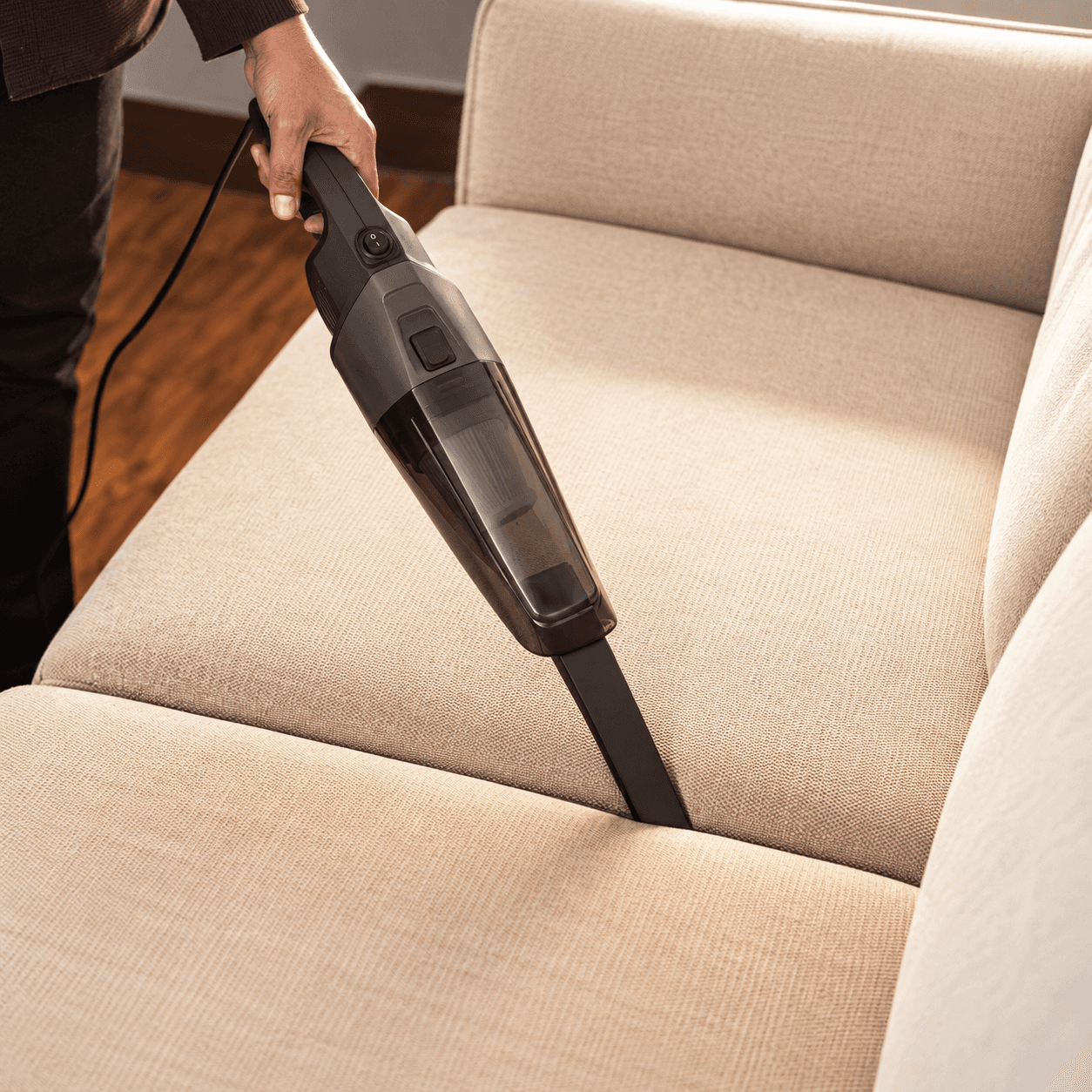
Vacuum the fabric and crevices with an upholstery attachment, using gentle suction around loose threads or delicate trim.
Find and photograph the complete care label before using any liquid.
Check the manufacturer's current instructions for the exact furniture or fabric when possible.
Blot a fresh spill with a clean, absorbent white towel. Work from the outside toward the center and avoid scrubbing.
If the instructions permit the proposed product, test a very small hidden area and let it dry completely before judging it.
Stop if you see color transfer, a ring, stiffness, pile distortion, shrinkage, spreading color, or a lasting texture change.
Do not mix cleaning products, use a solvent product in an unventilated do-it-yourself setup, or keep adding moisture because a spot remains. Do not remove and wash a cushion cover unless its instructions specifically allow that. Keep electrical components and powered furniture controls dry and follow the furniture maker's directions.
Why a W or WS code is not a blanket approval
This is the part that causes the most confusion. A W code means a water-based method is permitted within the manufacturer's instructions. It does not mean every amount of water, every cleaning product, or every machine is safe.
For example, some furniture makers describe W as water-based spot cleaning but explicitly do not recommend hot-water extraction or steam cleaning for those fabrics. A WS code offers more method options, but the cleaner still has to test the fabric and consider the entire piece.
Think of the code as the first gate, not the final decision.
When professional evaluation makes sense
Professional evaluation is a sensible next step when:
the label is missing, incomplete, or conflicts with other instructions;
the furniture is valuable, delicate, antique, custom, or sentimental;
the fabric has multiple colors, a pile, decorative trim, buttons, or mixed materials;
there is widespread soil, an unknown stain, dye transfer, a water ring, or evidence of previous product use;
cushion fill, backing, or drying conditions may create a moisture problem;
the fabric is worn, sun-damaged, frayed, loose, or otherwise unstable;
an odor or spot seems to extend below the face fabric;
you need overall cleaning rather than a small manufacturer-approved spot treatment.
A careful upholstery cleaning evaluation should identify the available care information, inspect the construction and condition, test the proposed approach, explain realistic limits, and choose the least aggressive method that fits the piece.
Area rugs require a separate decision because the face fibers, backing, dyes, foundation, floor below, and drying setup all matter. Our guide to area rug cleaning explains that service separately.
What a responsible answer sounds like
A responsible cleaner may say the piece appears to be a reasonable wet-cleaning candidate after inspection and testing. The cleaner may recommend lower moisture, a solvent-based method, limited spot work, or declining the job if the risk is too high.
No pretest can promise a perfect result. Cleaning may improve removable soil while permanent discoloration, wear, dye loss, old water marks, pile damage, or fiber damage remains. Those limits should be discussed before the work starts.
The practical answer
To tell whether upholstery is safe to wet clean, combine the care label with manufacturer guidance, fabric and construction inspection, an inconspicuous test, realistic moisture control, and a drying plan. W and WS are encouraging signs, not automatic permission for saturation or extraction. S, X, missing labels, unstable dyes, delicate construction, or damaged fabric call for a different approach or professional judgment.
If you want help evaluating a sofa, chair, sectional, or other upholstered piece, you can request an estimate. Share a few clear photos of the full piece, the affected areas, and every care label you can find. That gives us a better starting point before any cleaning method is chosen.