
Tile & Grout Tips
Should Grout Be Sealed After Professional Cleaning?
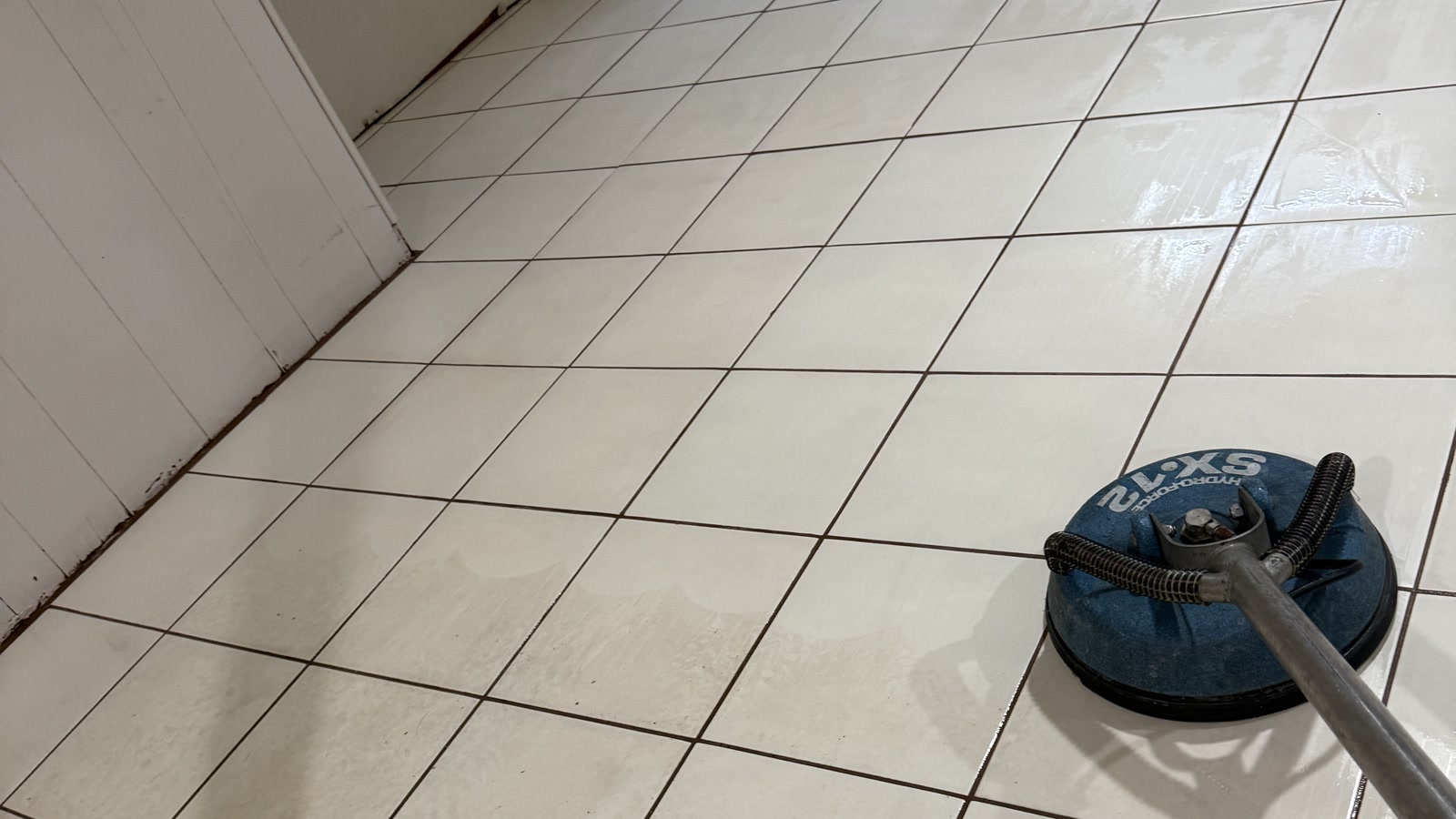
Grout often benefits from sealing once it is clean, dry, and in sound condition. Learn when sealing helps, when to wait, and what it cannot fix.
Usually, yes—sound, porous cement-based grout often benefits from a suitable sealer after professional cleaning, once the grout is clean, dry, and ready for the selected product. But sealing is not automatic. Some grout products do not need sealer, damaged or damp grout may need a different solution first, and sealer will not repair cracks, stop leaks, or make a floor stain-proof.
That distinction matters. The best time to discuss sealing is after the surface has been cleaned and the tile, grout, previous coatings, moisture conditions, and remaining discoloration can be evaluated clearly.
What grout sealer actually does
Many traditional cement-based grout joints are porous. A compatible sealer can reduce how readily those joints absorb spills and everyday soil, which can make routine care more manageable. It adds protection; it does not create an invisible force field.
Even sealed grout still needs normal cleaning and prompt attention to spills. Traffic, cleaning habits, moisture, the product used, and the condition of the installation all affect how that protection performs over time.
Most glazed ceramic or porcelain tile does not need the same treatment as porous grout. Natural stone, unglazed tile, and other absorbent materials can have different requirements, so the tile itself must be identified before a product is applied across the surface.
When sealing after cleaning usually makes sense
Sealing is often worth considering when all of the following are true:
The grout is a porous, cement-based material that can accept the selected sealer.
The grout is sound, with no loose, missing, or actively cracking areas that need repair first.
Professional cleaning has removed the soil and residue that can reasonably be removed.
The grout has dried enough for the specific product and site conditions.
There is no unresolved moisture problem or incompatible coating.
The owner understands that sealing supports maintenance but does not make grout waterproof or stain-proof.
Kitchens, entry areas, bathroom floors, and other frequently used tile surfaces can be good candidates because grout lines collect tracked soil, cooking residue, soap residue, and spills. The decision still depends on the material and condition—not simply the room name.
If the surface has not been evaluated yet, start with professional tile and grout cleaning. Cleaning and extraction can expose the grout’s actual condition and make the sealing recommendation more reliable.
Why cleaning should come before sealing
Applying sealer over embedded soil, grease, soap residue, or an old maintenance product can trap an uneven appearance or interfere with how the sealer penetrates and performs. Professional cleaning is the preparation step, not a cosmetic extra.
A practical cleaning process may include inspecting the installation, choosing a surface-appropriate solution, agitation, soil removal, extraction, rinsing, and a final review. The exact method changes with the tile, grout, buildup, nearby materials, drainage, and access.
Cleaning also establishes realistic limits. Some dark areas may be permanent discoloration, old dye, mineral deposits, worn material, previous coatings, or moisture-related changes rather than removable soil. Sealing those areas will not make the color uniform. It preserves the condition that exists when the product is applied.
Freshly cleaned grout can also look temporarily darker while it is wet. That is a separate issue from permanent staining. Our guide to why grout looks darker when wet explains why the final appearance should be judged after the surface has had enough time to dry under the actual site conditions.
When to wait, repair, or skip sealing
The grout is cracked, loose, or missing
Sealer does not rebuild a grout joint. Loose tile, movement cracks, missing grout, or failed joints may need repair by the appropriate professional before sealing is considered. Coating damaged material can make the surface look finished without correcting the underlying problem.
Moisture is still present or keeps returning
The required drying period depends on the product, temperature, humidity, airflow, grout depth, and installation. A floor that is still damp should not be rushed because the calendar says it has been long enough.
Recurring darkening, white residue, or moisture coming through the assembly deserves evaluation. Sealer is not waterproofing, and it should not be used as a repair for a leak or substrate problem.
The grout or tile is not a suitable candidate
Epoxy grout and some newer grout products are designed not to require a separate sealer. Previously color-sealed grout may already have a protective coating. Dense glazed tile may not absorb a penetrating product, while natural stone or unglazed tile may require a product selected for both the tile and grout.
When the material is uncertain, testing a small, inconspicuous area and checking the manufacturer’s instructions is safer than making a blanket recommendation.
A previous coating is still on the surface
Old sealers, waxes, colorants, and maintenance products can change absorption. They may need to be identified or removed before another product is considered. Applying a new sealer over an incompatible coating can produce uneven results or residue on the tile.
The goal is color correction
A clear penetrating sealer is not designed to repaint grout. If cleaned grout remains uneven or permanently discolored, color sealing may be a separate option for a suitable installation. That decision requires its own preparation and test because changing color is different from reducing absorption.
Penetrating sealer versus a surface coating
A penetrating or impregnating sealer is intended to enter a porous material rather than leave a thick film on top. A topical coating remains closer to the surface and can change sheen, texture, slip characteristics, or maintenance needs.
Neither category is automatically right for every installation. Product selection should account for the grout type, tile finish, wet or dry setting, existing treatments, desired appearance, traffic, and manufacturer instructions. This is why a small test area and a written scope are useful before the full floor is treated.
For a closer look at how the service is planned, see our tile and grout sealing page.
What a professional evaluation should cover
Before recommending sealing, an experienced cleaner should review:
Material: Is the grout cement-based, epoxy, pre-mixed, color-sealed, or unknown? Is the adjoining tile glazed, unglazed, natural stone, or another material?
Condition: Are there cracks, loose tile, missing grout, damaged caulk, worn coatings, or areas that need repair?
Moisture: Is the dark appearance normal drying, or is moisture returning from another source?
Contamination: Could grease, soap, old sealer, wax, dye, or mineral residue affect cleaning or penetration?
Compatibility: Does the chosen product match the material and existing treatment? What does its current label or technical data require?
Expectations: Is the goal easier routine maintenance, color correction, water management, or repair? Sealer only addresses part of that list.
After cleaning, a small test can help confirm absorption and appearance. Application details—coverage, number of coats, residue removal, ventilation, cure time, and return to service—should follow the selected product’s instructions and the conditions at the property.
Safe DIY boundaries
Homeowners can inspect the grout in good light, note cracked or missing areas, locate product records from the original installation, and test routine cleaning in a small area with a tile-safe product. Photos of the whole floor and close-ups of the grout are useful when requesting an evaluation.
Avoid mixing cleaning products, guessing at strong acids or solvents, or coating an entire floor before compatibility is known. Decorative tile, natural stone, previously coated grout, and wet areas can react differently from a standard glazed tile floor. If a test changes the tile’s sheen, color, or texture, stop.
Also avoid using sealer as a shortcut around loose tile, failed caulk, ongoing water entry, or material that is breaking apart. Those are repair or moisture questions, not cleaning questions.
Caring for grout after sealing
Follow the written product guidance before walking on, wetting, or washing the surface. There is no honest universal cure time for every floor.
Once the surface is back in service:
Wipe spills promptly instead of allowing them to dwell.
Use cleaning products and tools appropriate for the tile and sealer.
Rinse away cleaner residue when the product instructions call for it.
Avoid assuming that stronger means safer or more effective.
Watch high-traffic areas for changes in absorption or appearance.
Resealing should be based on the product, wear, traffic, cleaning routine, moisture, and how the grout performs—not a fixed promise that applies to every property.
Common questions about sealing cleaned grout
Does sealing make grout waterproof?
No. A suitable sealer can reduce absorption, but it does not waterproof a tile assembly, repair a leak, or eliminate routine maintenance.
Does every tile floor need to be sealed?
No. The grout and tile must be identified. Porous cement-based grout often benefits, while epoxy grout and some newer grout products may not require sealer. Glazed tile and porous stone also have different needs.
Can sealer make dark grout light again?
Not by itself. Cleaning may remove soil, but permanent discoloration, moisture, old coatings, or material differences can remain. A clear sealer generally preserves the appearance present at application.
How soon after professional cleaning can grout be sealed?
Only after the surface is clean and dry enough for the selected product. Temperature, humidity, airflow, grout depth, and site conditions matter, so use the product instructions and an on-site evaluation instead of a universal number.
How often should grout be resealed?
There is no single schedule for every floor. Product type, traffic, cleaning, moisture, wear, and previous treatments determine when another evaluation makes sense.
The practical answer
Grout should often be sealed after professional cleaning when it is porous, sound, compatible, and fully prepared. It should not be sealed automatically when the material is unknown, the surface is damaged, moisture is unresolved, or an existing coating may interfere.
If you want the cleaning and sealing decision based on your actual floor, request an estimate with photos of the room, close-ups of the grout, approximate measurements, your town, and any information about prior sealers or repairs.